
 Share
Share 


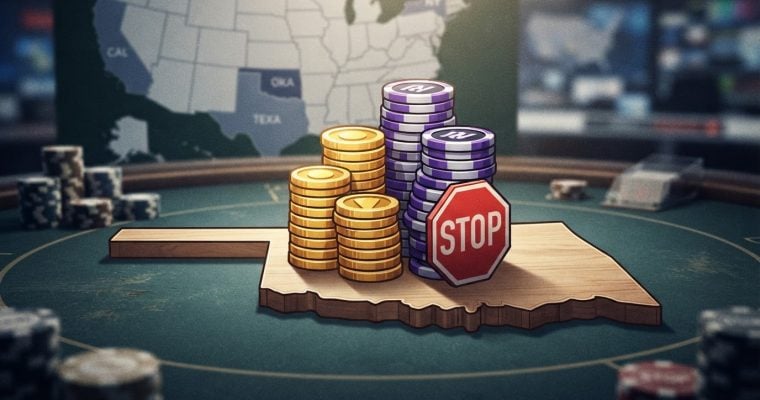
Stake.us and Modo are changing how they operate in Oklahoma ahead of a new state law that bars dual-currency sweepstakes casinos beginning Nov. 1.
According to Covers, Stake.us will stop offering games to Oklahoma players after Oct. 30, though users will still be able to redeem sweepstakes coins after that date. Modo has already stopped selling bundles that include sweepstakes coins to Oklahoma users and plans to stay live in the state with Gold Coin-only games.
Oklahoma law is forcing operators to adjust before Nov. 1
The changes are tied to SB 1589, an Oklahoma law that prohibits sweepstakes casinos using dual currencies. Oklahoma lawmakers overrode Gov. Kevin Stitt’s veto of the bill in May 2026, and the measure takes effect Nov. 1, 2026.
As Covers summarized, the law targets “the dual-currency gaming models used by sweepstakes casinos,” leaving operators with a narrow choice: remove sweepstakes coins from their offerings or stop offering services in Oklahoma.
That makes Stake.us and Modo two of the first visible examples of operators revising products before the deadline. Any company that continues serving players in Oklahoma after Nov. 1 will need to make sure its games comply with the new law.
Why this matters beyond Oklahoma
Oklahoma is not alone. The Covers report notes that California, Connecticut, Indiana, Louisiana, Maine, Montana, New Jersey, New York, and Tennessee have also prohibited sweepstakes casinos. In Idaho, Michigan, Nevada, and Washington, sweepstakes casinos are blocked through existing gambling laws and regulatory enforcement.
For readers in New York, the immediate development is still in Oklahoma, but it adds to the broader multi-state trend of tighter scrutiny around sweepstakes models that rely on separate virtual currencies.
Separate tribal dispute adds to Oklahoma gaming tensions
The report also points to a separate but related fight in Oklahoma over prediction markets and tribal gaming rights. Alabama-Quassarte Tribal Town has partnered with Kalshi to launch PokkeTrades, a prediction market app owned and marketed by the tribe, with Kalshi supplying the exchange infrastructure.
The Oklahoma Indian Gaming Association has argued that sports prediction markets threaten tribal gaming rights and compete with revenue streams that support tribal services. Covers said 145 tribes and tribal organizations have asked the U.S. Supreme Court to consider the issue.
For players, the clearest date to watch is Nov. 1, when Oklahoma’s sweepstakes-casino restrictions take effect.
—
Source: As reported by Ziv Chen.