
 Share
Share 


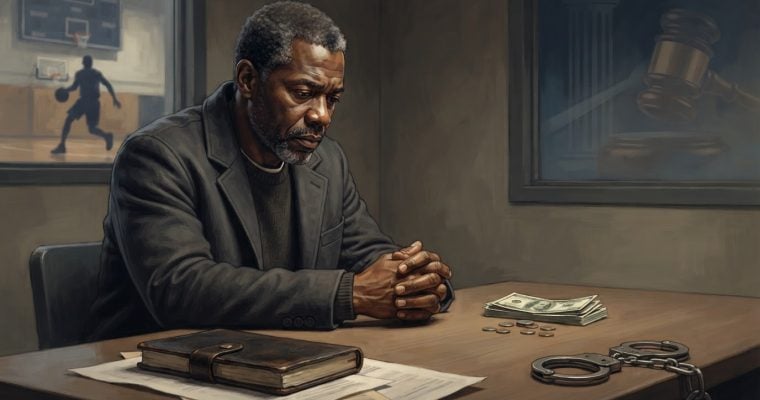
Jalen Smith, a former basketball trainer accused of helping run a wide-ranging NCAA point-shaving scheme, was sentenced to 72 months in federal prison, according to federal prosecutors. The sentence makes Smith the first defendant to be sentenced in the case.
U.S. District Judge Nitza I. Quiñones Alejandro also ordered three years of supervised release, about $1.1 million in restitution, and $75,000 in forfeiture. Smith had pleaded guilty in March to bribery in sporting contests, conspiracy to commit wire fraud, wire fraud, and possession of a firearm by a felon.
Prosecutors said scheme hit dozens of Division I games
Federal prosecutors said the broader scheme ran from about September 2022 to February 2025 and corrupted more than 29 NCAA Division I games. According to the government, more than 39 players across over 17 Division I teams were involved.
Prosecutors said Smith acted as a fixer, recruiting and bribing players to underperform so their teams would fail to cover the point spread. The reported payments ranged from $10,000 to $30,000 per game.
Authorities said the scheme generated more than $3 million in fraudulent wagers and caused more than $1.1 million in losses for sportsbooks.
U.S. Attorney David Metcalf said Smith “played a central role in this point-shaving scheme, which corrupted the integrity of NCAA games and the sport of basketball itself.”
Firearms charge was included in the sentence
The prison term also covered a firearms offense tied to a separate charge. Prosecutors said Smith was charged after a loaded semi-automatic pistol was recovered during a 2025 search of his home in Charlotte, North Carolina.
At sentencing, Assistant U.S. Attorney Louis D. Lappen described the matter as “an extremely serious, far-reaching, massive bribery [and] sports fixing case.” Smith told the court, “My decisions have consequences, and I accept all of them.”
For bettors and sportsbooks, the case is a reminder that point-shaving investigations can reach well beyond a single game or team. Several key details remain unresolved publicly, including how many other defendants remain in the case and when additional sentencings may occur.
—
Source: As reported by Sergey Demidov.