
poker game hands (2026)
Poker game hands are the five-card combinations that decide who wins a pot, ranked from royal flush at the top down to high card at the bottom. Every major variant, including Texas Hold’em, Omaha and seven-card stud, uses the same nine core categories to compare cards at showdown. Learning this order cold is the first real skill in poker, before bluffing, bet sizing or reading opponents ever come into play.
The 10 Poker Game Hands, Ranked
Standard poker uses 52 cards and nine hand categories (ten if you count “high card” as its own tier). A hand in a higher category always beats a hand in a lower one, regardless of the specific cards involved. A pair of twos beats any high card hand, for example, even an ace-high one.
| Rank | Hand | Description | Example |
|---|---|---|---|
| 1 | Royal Flush | A, K, Q, J, 10, all one suit | A♠ K♠ Q♠ J♠ 10♠ |
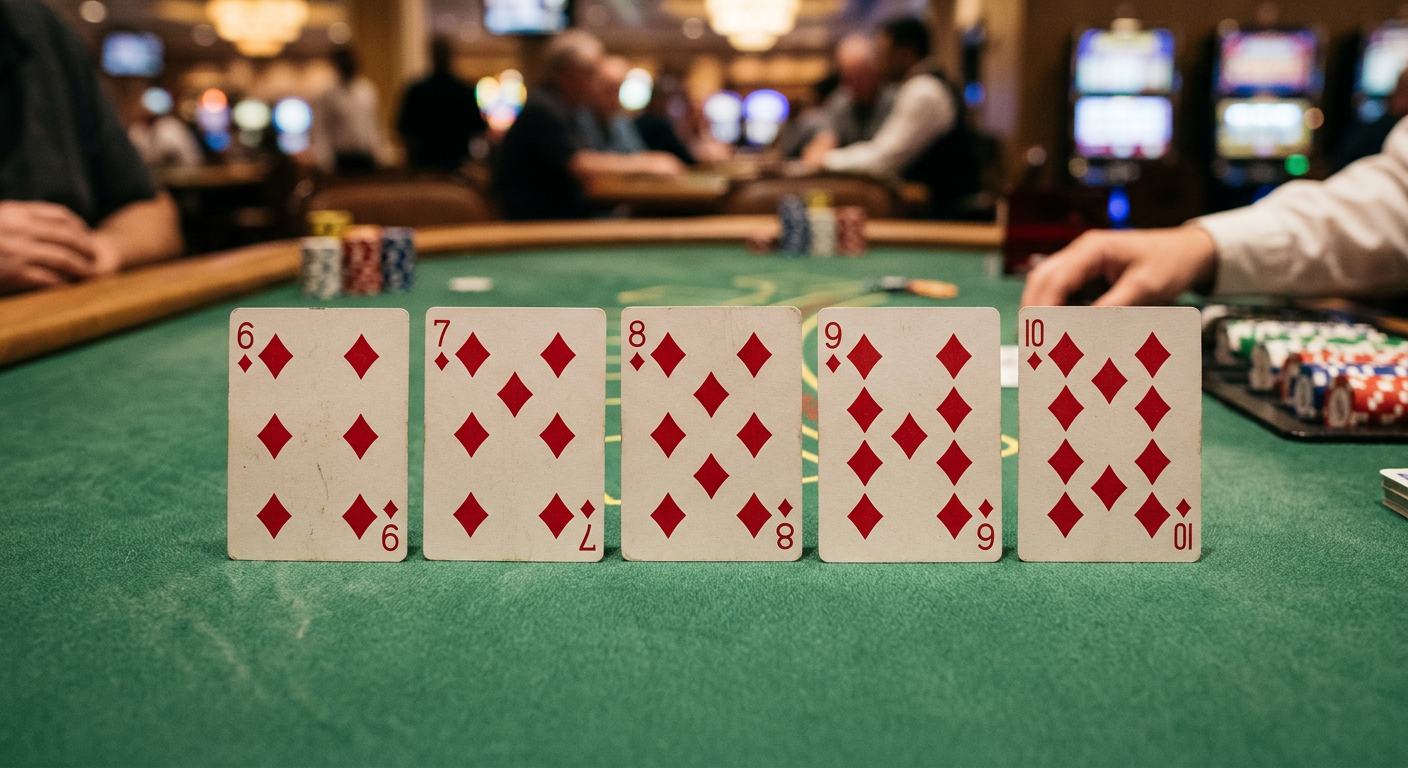
| 2 | Straight Flush | Five sequential cards, one suit | 6♦ 7♦ 8♦ 9♦ 10♦ |
| 3 | Four of a Kind | Four cards of matching rank | 9♠ 9♦ 9♣ 9♥ A♣ |
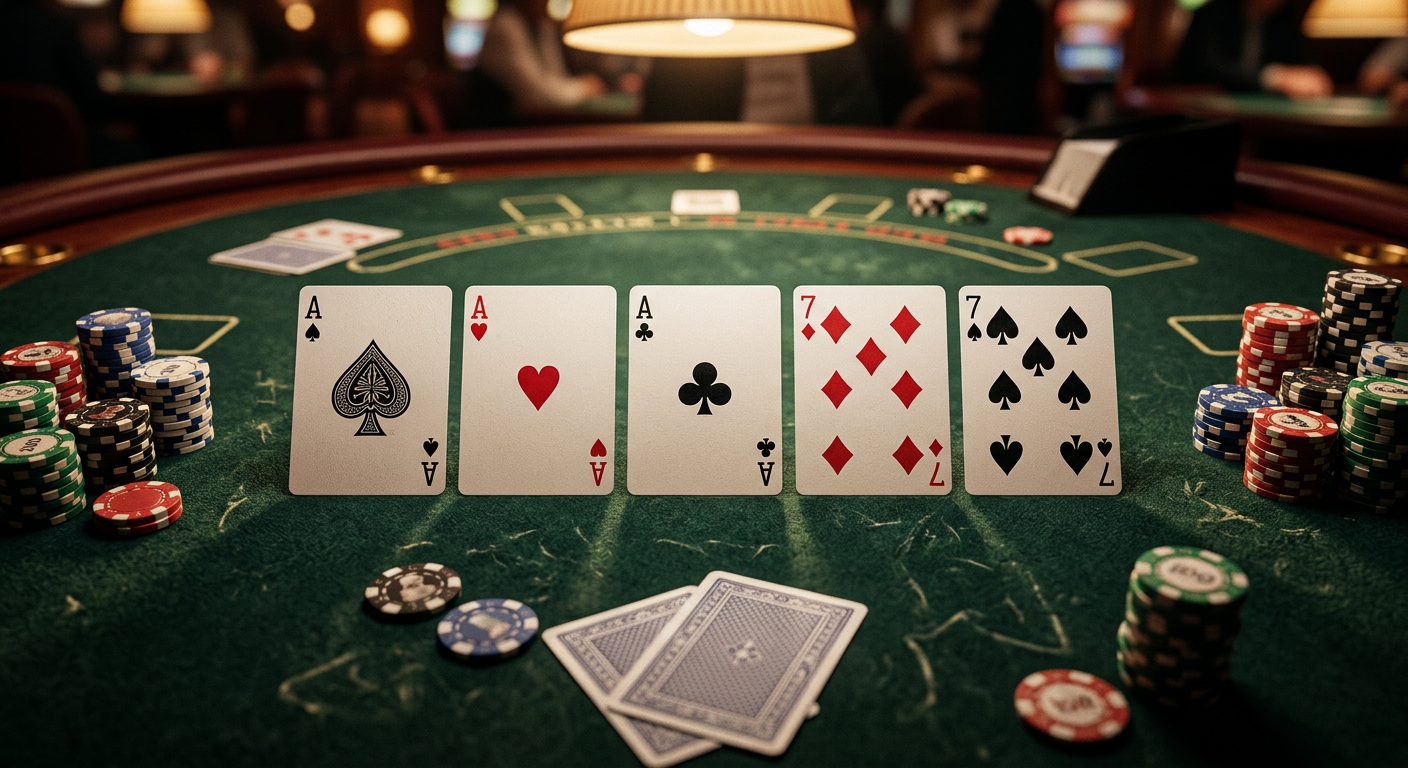
| 4 | Full House | Three of a kind plus a pair | A♦ A♠ A♣ 7♣ 7♥ |
| 5 | Flush | Five cards, one suit, any order | Q♦ 8♦ 6♦ K♦ 10♦ |
| 6 | Straight | Five sequential cards, mixed suits | 7♠ 8♦ 9♣ 10♥ J♠ |
| 7 | Three of a Kind | Three cards of matching rank | 10♠ 10♦ 10♣ 6♥ A♠ |
| 8 | Two Pair | Two separate matching pairs | 6♠ 6♦ Q♠ Q♥ K♠ |
| 9 | One Pair | Two cards of matching rank | J♦ J♠ 7♣ 9♥ K♠ |
| 10 | High Card | No pair or better; highest card plays | K♥ 7♦ 8♣ J♠ 10♥ |
For a deeper breakdown of what a single hand is made of and how it’s formed from your hole cards and the board, see this poker hand guide.
How Rare Is Each Hand?
Rarity drives ranking. There are fewer ways to make a royal flush than a pair, so it sits at the top. Out of 2,598,960 possible five-card combinations from a 52-card deck:
- Royal flush: 4 combinations, about 1 in 649,740
- Straight flush (excluding royal): 36 combinations, about 1 in 72,193
- Four of a kind: 624 combinations, about 1 in 4,165
- Full house: 3,744 combinations, about 1 in 694
- Flush: 5,108 combinations, about 1 in 509
- Straight: 10,200 combinations, about 1 in 255
- Three of a kind: 54,912 combinations, about 1 in 47
- Two pair: 123,552 combinations, about 1 in 21
- One pair: 1,098,240 combinations, about 1 in 2.4
- High card: 1,302,540 combinations, about 1 in 2
These odds assume a random five-card draw, not the seven cards seen in Hold’em (two hole cards plus five community cards), which slightly changes the practical frequency of each hand appearing at showdown.
How Ties Get Broken
When two players hold the same category of hand, the cards themselves settle the tie.
- Straights and straight flushes: the hand with the higher top card wins. A jack-high straight beats a nine-high straight.
- Four of a kind and three of a kind: the higher-ranked set wins outright, since only one player can hold a given rank’s four (or three) cards at a time in a single deck.
- Full houses: compare the three-of-a-kind portion first, then the pair if that’s also tied.
- Flushes: compare card by card from highest to lowest until one hand is higher.
- Two pair: compare the higher pair, then the lower pair, then the kicker card.
- One pair and high card: compare the pair (or top card), then work down through remaining cards as kickers.
Suits never break ties. A flush in hearts and a flush in clubs of identical rank split the pot if both hands are otherwise equal, which happens in community-card games like Hold’em when the board itself plays a flush or straight.

How Hand Rankings Shift by Game
The order above covers standard high-hand poker, but not every variant plays that way.
- Lowball games (like razz or ace-to-five triple draw): the lowest hand wins, and straights and flushes don’t count against you.
- High-low split games (like Omaha Hi-Lo): the pot divides between the best high hand and the best qualifying low hand.
- Short-deck (Six Plus) Hold’em: removes cards 2 through 5, which flips flush and full house rankings, since flushes become harder to make than full houses.
These variations matter most once you move past basic Hold’em into games like the ones covered in this guide to hands in poker, which looks at how starting hands and rankings interact across formats.

Memorizing the Order Fast
Most players lean on a simple trick: each category up the ladder generally requires more matching or sequential cards, or a rarer combination of them. Full house outranks flush because building three-of-a-kind plus a pair is statistically harder than collecting five same-suited cards. Straight flush outranks four of a kind for the same reason: the constraint of both sequence and suit is tougher to satisfy than four matching ranks.
A printable or saved reference speeds this up while you’re still building the habit. The cheat sheets for poker page has quick-reference material worth keeping open during early sessions.
Where to Practice
Once the rankings are second nature, the fastest way to reinforce them is at the table. Games like Ultimate Texas Hold’em and Three Card Poker use these same hand rankings against a live dealer or the house rather than other players, which is a lower-pressure way to test your reads before sitting down in a full ring game.