
poker hand (2026)
A poker hand is the set of five cards a player uses to compete for the pot, ranked according to a fixed hierarchy that runs from a royal flush at the top down to a high card at the bottom. Whoever holds the strongest poker hand at showdown wins, and that ranking system is identical across nearly every variant played in US casinos and cardrooms, from Texas hold’em to seven-card stud.
The 10 poker hand rankings, from best to worst
Standard poker uses a 52-card deck with four suits and no suit ranked above another. Hand strength depends on the pattern of ranks and suits you hold, not which suits they happen to be.
| Rank | Hand | Example |
|---|---|---|
| 1 | Royal flush | A-K-Q-J-10, same suit |
| 2 | Straight flush | 9-8-7-6-5, same suit |
| 3 | Four of a kind | 7-7-7-7-2 |
| 4 | Full house | K-K-K-4-4 |
| 5 | Flush | A-J-8-6-2, same suit |
| 6 | Straight | 10-9-8-7-6, mixed suits |
| 7 | Three of a kind | Q-Q-Q-9-3 |
| 8 | Two pair | 10-10-5-5-K |
| 9 | One pair | J-J-8-6-2 |
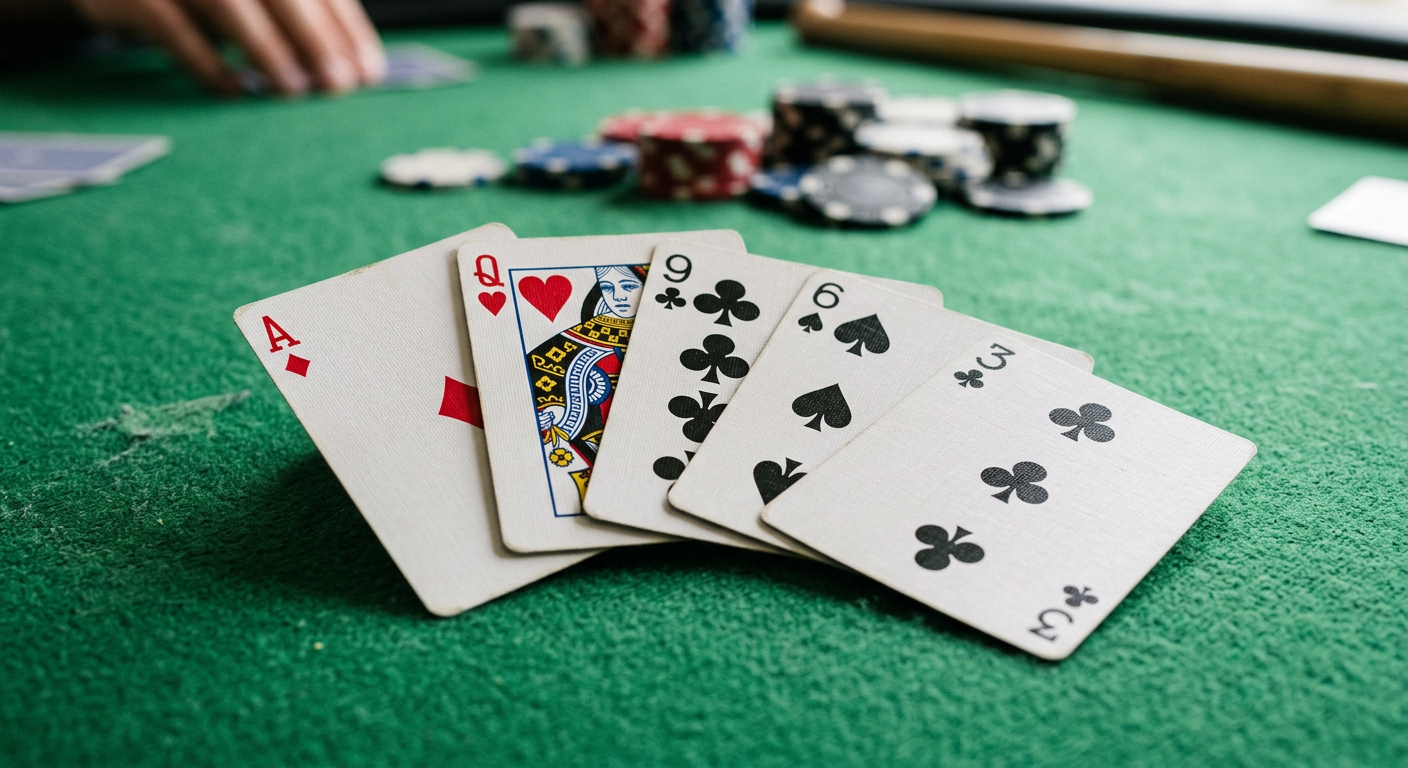
| 10 | High card | A-Q-9-6-3, mixed suits |
Royal flush and straight flush
A royal flush is a straight flush that runs A-K-Q-J-10, and it’s unbeatable in games without wild cards. Any other five-card sequence of the same suit is a straight flush, ranked by its highest card, so a jack-high straight flush beats a nine-high one.
Four of a kind, full house, and flush
Four of a kind means all four cards of one rank plus a fifth “kicker” card. A full house combines three of a kind with a separate pair, and the three-of-a-kind rank decides ties before the pair does. A flush is five cards of one suit that aren’t in sequence, ranked card by card from the highest down.
Straight, three of a kind, two pair, and one pair
A straight is five cards in sequence across different suits. Aces can play high (A-K-Q-J-10) or low (5-4-3-2-A), but not both in the same hand. Three of a kind, two pair, and one pair follow from there, each ranked first by the paired or tripled cards, then by any remaining kickers.
High card
When no player makes a pair or better, the pot goes to whoever holds the highest single card, with ties broken by the next-highest card, and so on down the hand. This is the most common outcome in short-handed games and the weakest hand you can show down.

How ties get broken
Two players can hold the same category of hand, and suits never settle a tie. Instead, poker uses kickers, the unmatched cards that fill out a five-card hand.
- Same pair, different kicker: J-J-9-6-2 beats J-J-8-7-4 because the 9 outranks the 8.
- Same full house category: the three-of-a-kind portion is compared first, so 8-8-8-4-4 beats 6-6-6-K-K.
- Identical five cards, different suits: the pot is split.
If you’re still getting comfortable with which combinations beat which, the breakdown of hands in poker covers the same rankings with more examples of borderline comparisons, and a cheat sheet for poker is worth keeping open at the table until the order becomes automatic.
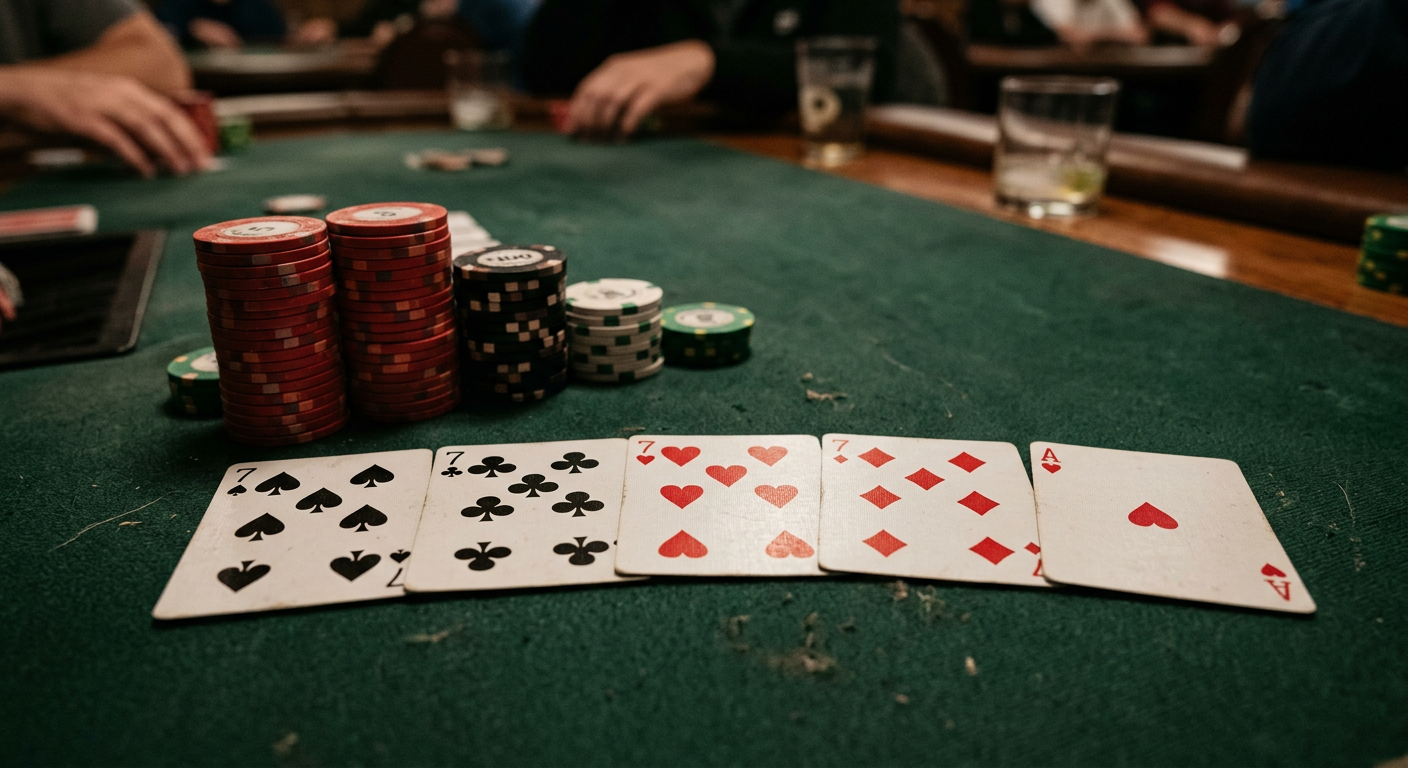
The odds behind each hand
There are 2,598,960 possible five-card combinations from a standard 52-card deck. That math is why some hands are rare and others show up almost every session.
- Royal flush: 4 ways, about 1 in 649,740
- Straight flush (excluding royal): 36 ways, about 1 in 72,193
- Four of a kind: 624 ways, about 0.024%
- Full house: 3,744 ways, about 0.14%
- Flush: 5,108 ways, about 0.20%
- Straight: 10,200 ways, about 0.39%
- Three of a kind: 54,912 ways, about 2.1%
- Two pair: 123,552 ways, about 4.75%
- One pair: 1,098,240 ways, about 42.3%
- High card: 1,302,540 ways, about 50.1%
Those figures apply to a random five-card draw. In games like Texas hold’em, where you choose the best five cards from seven, pairs and better show up more often than these raw odds suggest.

Hand rankings change by game type
The standard high-hand ranking above applies to Texas hold’em, seven-card stud, and most casino table games. But not every poker variant works the same way.
- Ace-to-five lowball games (like razz): the lowest hand wins, straights and flushes don’t count against you, and aces are always low.
- High-low split games: the pot divides between the best high hand and the best qualifying low hand.
- Wild-card games: adding a joker or designated wild card introduces a category above the royal flush, five of a kind.
Casino table games built around poker hands often add their own twists. In Three Card Poker, a straight actually outranks a flush because there are fewer possible three-card straights than flushes. Ultimate Texas Hold’em keeps the standard hand rankings but changes the betting structure, since you’re playing against the house rather than other players.

Where poker hands come from at the table
In Texas hold’em, each player gets two hole cards and combines them with five community cards to form the best five-card hand. In seven-card stud, you’re dealt seven cards total and pick the best five. Table games like Let It Ride (via three cards plus two community cards) and blackjack-adjacent poker variants apply the same five-card hierarchy but change how and when you see your cards. If you’re new to card games generally, the rules for how to play blackjack are a useful comparison point, since blackjack ranks hands by point total rather than by combination.
Practical tips for reading hand strength fast
- Check the board for pairs, three-of-a-kind, or four-to-a-flush possibilities before assuming your hand is good.
- Remember that two pair and three of a kind look strong but lose to straights and flushes that are easy to miss on a busy board.
- When comparing full houses, the triplet always outranks the pair in a tiebreak, never the reverse.
- Count outs, not just current strength: a flush draw with two cards to come completes roughly 35% of the time.