
cheat sheets for poker (2026)
Cheat sheets for poker work best as quick-reference tools you keep open in a second window or print and fold next to your chip stack, not as something you memorize word for word. The most useful ones cover four things: hand rankings, position at the table, preflop starting hand ranges, and pot odds. Get those down and you’ll make fewer costly mistakes in your first hundred sessions than most players make in a year.
What a poker cheat sheet should actually cover
A good cheat sheet answers the questions that come up every single hand, not the rare edge cases. That means:
- What beats what at showdown
- Where you’re sitting relative to the dealer button and blinds
- Which starting hands are worth playing from each seat
- Whether a call is mathematically justified based on pot odds
- How much to bet or raise in common spots
Everything else, like reading tells or adjusting to a specific opponent’s tendencies, comes with table time. It can’t be reduced to a chart.
Hand rankings, the foundation
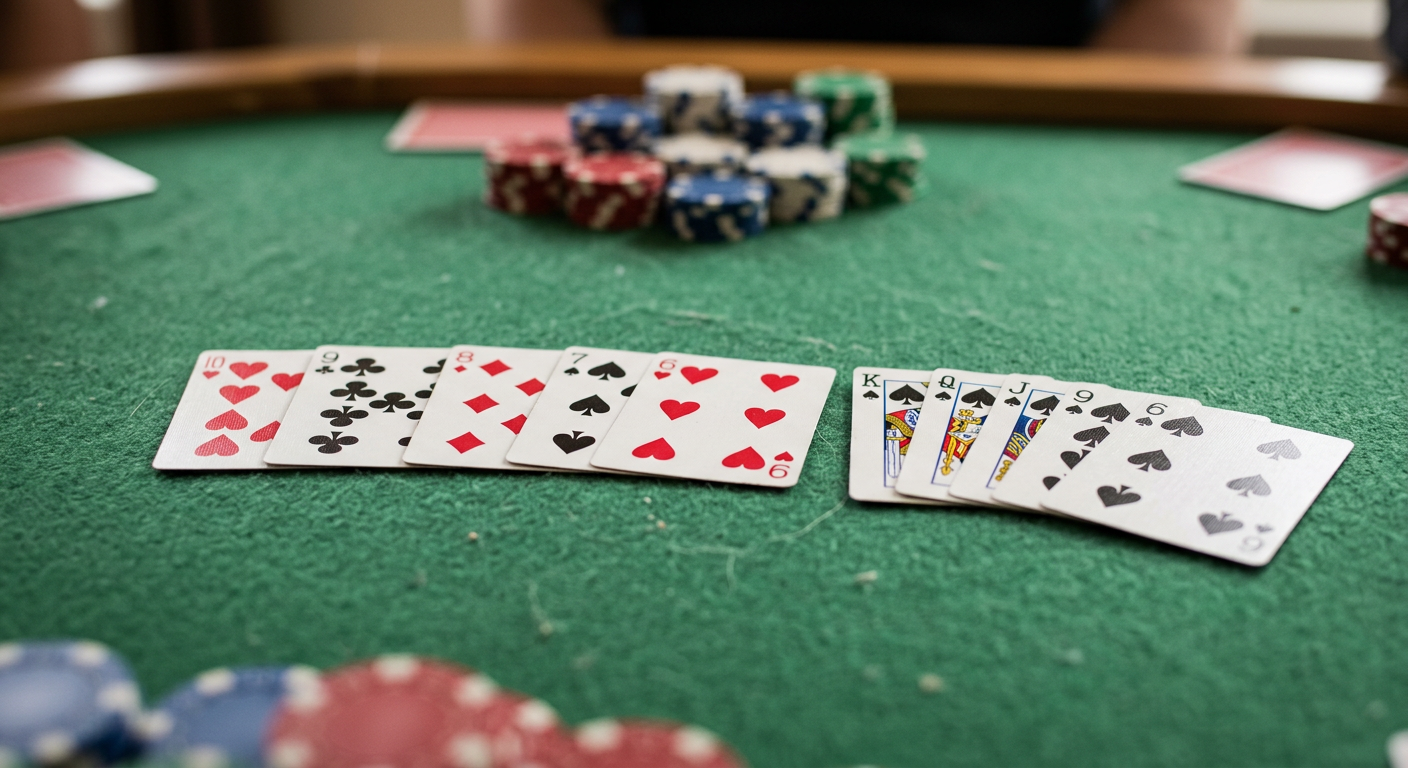
Every cheat sheet starts with hand rankings because they never change, no matter the poker variant. From strongest to weakest: royal flush, straight flush, four of a kind, full house, flush, straight, three of a kind, two pair, one pair, high card. If you’re new to the game or need the full breakdown of how these hands form and how ties get broken, our guide to hands in poker covers it in more depth.
Print this section for any home game with new players. Nine times out of ten, an argument about who won the pot traces back to someone misjudging a flush versus a straight.

Position at the table
In a six-handed no-limit hold’em game, seats are named relative to the blinds: under the gun (UTG, first to act), middle position (MP), the cut-off (CO), the button (BU), then small blind (SB) and big blind (BB). The player under the gun acts with the least information and should play the tightest range. The button acts last on every postflop street and can profitably play far more hands.
A cheat sheet that ignores position is close to useless, because the same hand (say, king-jack offsuit) can be a clear fold from UTG and a clear raise from the button.

Preflop starting hand charts
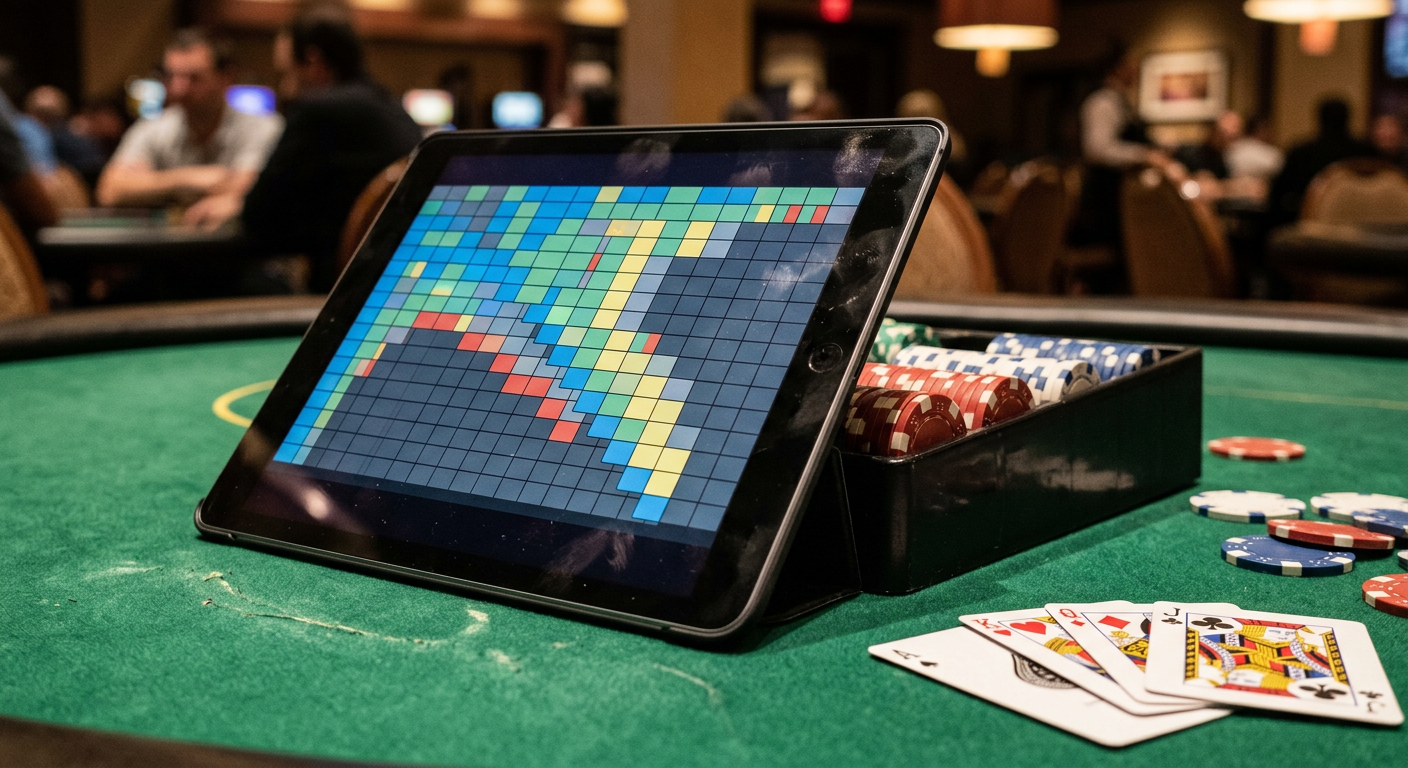
Preflop range charts map every possible two-card combination against a grid of positions, telling you whether to raise, call, or fold when no one else has entered the pot. A few things to keep in mind when using one:
- Charts assume a “standard” opening raise size, usually 2 to 3 big blinds. If your table plays bigger opens, tighten up slightly.
- Ranges shift once someone else has already raised or called. A separate set of charts covers “facing a raise” and “facing a limp” situations.
- Tournament charts differ from cash game charts, especially as the blinds grow relative to your stack.
- Live 9-handed and 10-handed games need extra position labels (lojack, hijack) that 6-max charts don’t include.
Treat these as training wheels. The goal is to eventually understand why a hand belongs in a range, not just to memorize a grid.

Pot odds and outs
This is the math half of the cheat sheet, and it’s the part most beginners skip even though it decides whether a call actually makes money over time.
Quick outs-to-odds reference
| Outs | Approx. odds to hit by the river |
|---|---|
| 4 (inside straight draw) | ~17% |
| 8 (open-ended straight draw) | ~32% |
| 9 (flush draw) | ~35% |
| 15 (combo draw) | ~54% |
The “rule of 4” is the simplest shortcut: multiply your outs by 4 (with two cards to come) to estimate your percentage chance of hitting. Multiply by 2 with one card left. Compare that percentage to the pot odds you’re getting, and you’ll know whether a call is profitable in the long run.
Bet sizing shortcuts
Bet sizing charts save time at the table and keep your bets from telegraphing your hand strength. Common defaults worth having on hand:
- Preflop open: 2.5 to 3 big blinds from most positions, larger from the blinds
- Continuation bet on the flop: 33% to 75% of the pot, depending on board texture
- Value bets on the river: 50% to 100% of the pot against hands that will call
- Bluff-raises: sized to make the pot math bad for your opponent, usually 2.5x to 3x their bet
None of these are hard rules. They’re starting points that keep you consistent while you learn to adjust based on stack sizes and opponent tendencies.
Where to put a cheat sheet to work
Home games and low-stakes live tables are the easiest places to actually use a printed sheet, since nobody minds if you glance at a card between hands. Online, most sites don’t allow reference material on screen during real-money play, so the goal shifts to internalizing the charts beforehand through practice hands.
If you’re planning a live session in New York, check the schedule of NY poker tournaments before you go so you know the structure and buy-in levels you’re walking into. Different variants also call for different cheat sheets: three card poker and Ultimate Texas Hold’em both use simplified hand rankings and payout structures that don’t map directly onto no-limit hold’em charts.
Building the habit beyond the sheet
Cheat sheets shorten the learning curve, but they’re a bridge, not a destination. Once position and starting hands feel automatic, the next skill worth developing is bankroll management and table selection, the kind of decisions that separate a break-even player from a winning one over hundreds of sessions.
If card games aren’t your only interest at the tables, our guides on skills and slots and Fire Kirin cover other popular options you’ll find at NY casinos and social clubs. And if you split your time between poker nights and football season, the NFL playoffs guide breaks down bracket structure the same way this page breaks down starting hands. For a different card game with its own quick-reference basics, our how to play blackjack guide is a solid next stop.