

 Share
Share 


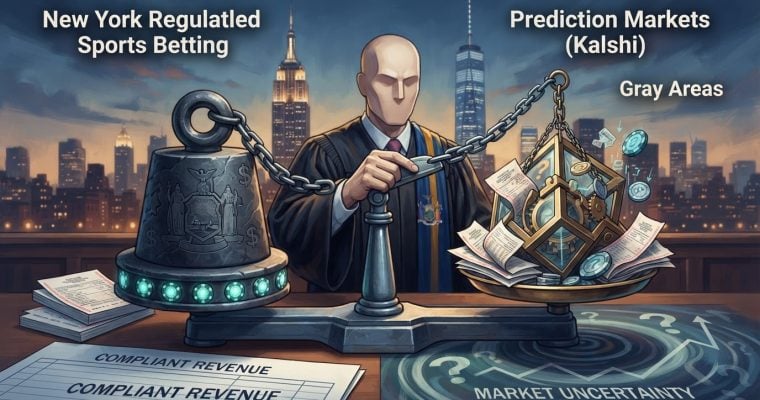
New York officials are escalating their fight with prediction market operator Kalshi, arguing the company is offering a gambling-like product without following the state rules that apply to licensed sportsbooks such as FanDuel and DraftKings.
Gov. Kathy Hochul and Attorney General Letitia James said prediction markets expose New Yorkers to “serious personal and financial risk.” Hochul said Kalshi has chosen to ignore New York’s gaming laws, while Kalshi said it was in talks with state officials and called the lawsuit “political theater.”
Why New York says prediction markets are different
According to the report, only nine companies are authorized to operate sports wagering in New York. Those operators went through a competitive bidding process and pay 51% of their revenue in taxes to the state.
That backdrop is central to the dispute. Attorney Bob McLaughlin, a partner at Whiteman, Osterman & Hanna, said prediction market companies have found a gray area in federal law to get around state restrictions. The article also said states across the country are taking legal action against prediction markets.
McLaughlin said regulators typically target operators rather than individual users. “Most jurisdictions, most regulators never go against the betters,” he said, adding that New York is seeking damages tied to wagers made in the state over the last year.
What the case could mean for FanDuel, DraftKings, and New York bettors
For New York’s regulated betting market, the dispute highlights the difference between companies licensed under state law and firms that say they can operate under federal rules.
That matters because FanDuel Sportsbook and DraftKings Sportsbook are among the operators specifically named in the report as part of New York’s authorized market. State officials appear to be arguing that prediction markets should not be able to offer similar products without the same licensing and tax obligations.
For bettors, the immediate takeaway is less about individual enforcement and more about whether certain markets remain available while the legal fight continues. The report noted that legislative efforts to regulate prediction markets have been slowed by federal court action, including in Minnesota, where a judge blocked a first-in-the-nation ban.
What to watch next
The key issue now is whether New York can force changes through state enforcement while prediction market operators continue to argue federal law allows their products. Bettors in New York should watch for further court filings, state guidance, or operator announcements as the case moves forward.
—
Source: As reported by OliviaHolloway; Tom Eschen.