

 Share
Share 


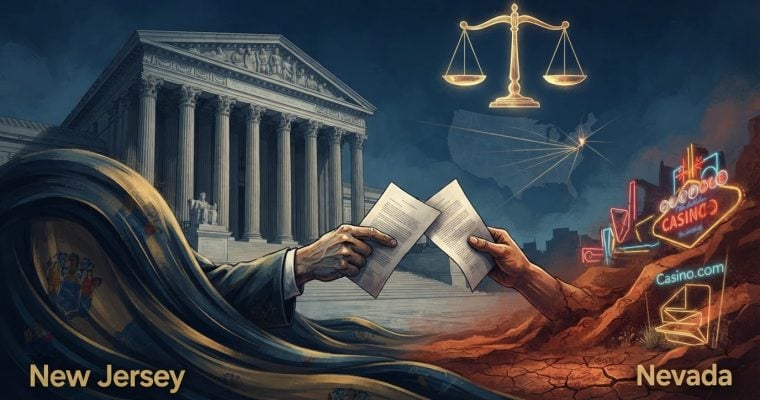
New Jersey has asked the U.S. Supreme Court to decide whether prediction markets can offer sports event contracts without complying with state gambling laws, escalating a dispute that could shape how these products are regulated nationwide.
The filing came the same day Nevada Gaming Control Board Chairman Mike Dreitzer took a tougher public stance, saying prediction markets amount to gambling regardless of how operators describe them. The conflict centers on Kalshi and has intensified after federal appeals courts in New Jersey and Nevada reached opposite conclusions.
New Jersey pushes for Supreme Court review
New Jersey Attorney General Jennifer Davenport filed a petition asking the high court to resolve whether federal commodities law overrides state gambling restrictions for sports event contracts.
The move followed a cease-and-desist letter New Jersey sent to Kalshi alleging violations of state gambling law. According to the source report, Davenport said the issue has now spread through litigation in at least 20 states.
Davenport said, “These companies have no right to offer their sports bets without following state law.”
The petition follows an April Third Circuit ruling that favored Kalshi in a 2-1 decision against New Jersey, finding federal law preempted the state’s restrictions.
Nevada argues state licensing protections are being bypassed
In Nevada, Dreitzer said companies offering these products outside the state system are sidestepping gambling safeguards built into the licensing process. He pointed to suitability standards, anti-money laundering controls, taxation, and protections against underage gambling as parts of that framework.
His comments align with a late-August Ninth Circuit decision that reached the opposite conclusion from the Third Circuit, ruling that Nevada’s gambling law was not preempted by federal commodities trading law in regulating sports event contracts.
That split between the Third and Ninth Circuits raises the stakes for operators, regulators, and consumers because the Supreme Court could now be asked to settle who has primary authority over these offerings.
What to watch next
The immediate question is whether the Supreme Court will agree to hear New Jersey’s petition. Other states are also watching closely, because the outcome could help determine whether prediction markets must obtain state gambling licenses at all.
For readers in New York and other regulated markets, the case is worth monitoring as states continue to assess whether sports-event contracts belong under existing gambling laws or under federal commodities rules.
—
Source: As reported by Lucas Dunn.