
world cup prediction markets (2026)
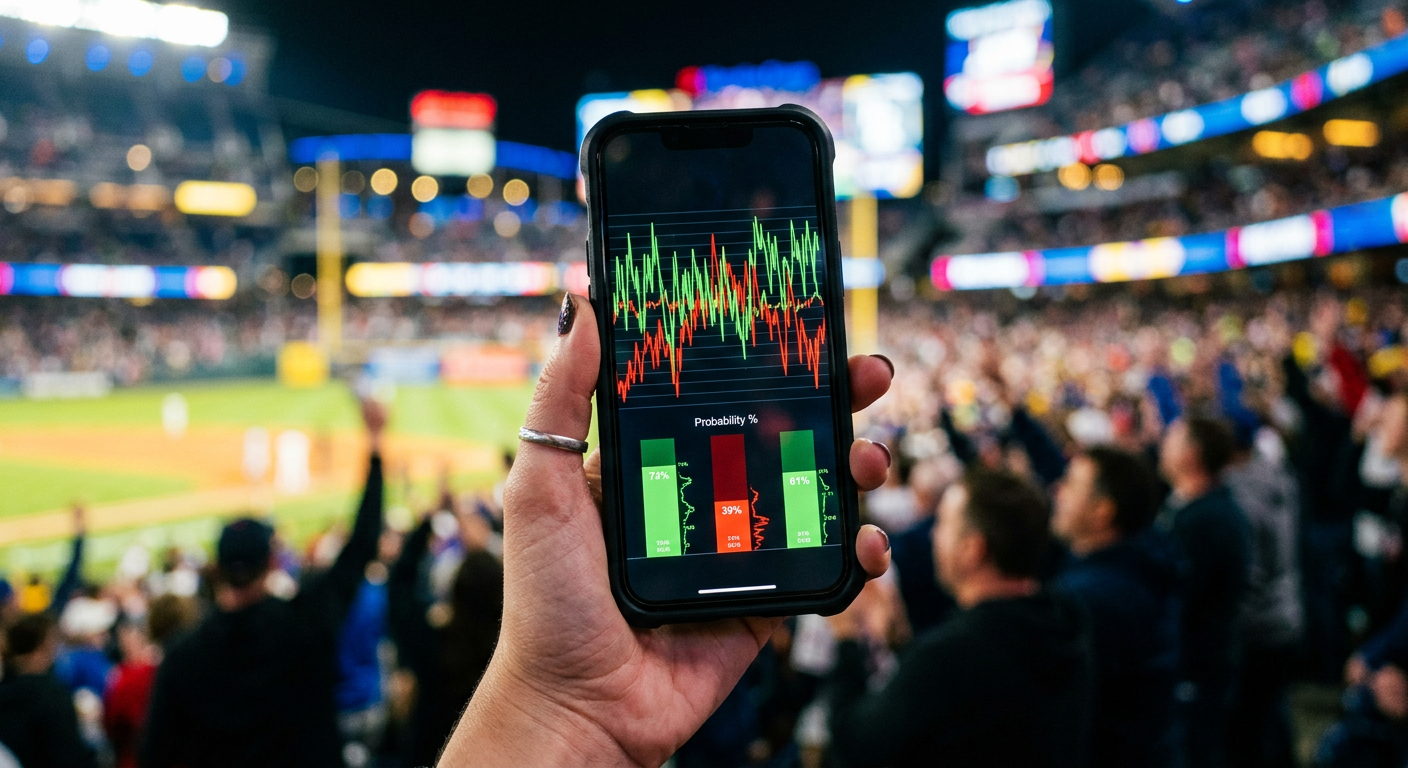
World Cup prediction markets are platforms where traders buy and sell contracts tied to specific outcomes, such as which country wins the tournament, who reaches the final, or where future editions get hosted. Unlike traditional sportsbook odds, prices on these markets move in real time as traders place bets, so the current price of a contract reflects the crowd’s estimate of that outcome’s probability at that moment.
These markets have grown alongside the broader event-contract industry in the US, with platforms like Polymarket, Kalshi, and Fanatics Markets now listing dozens of World Cup-related questions ahead of the 2026 tournament in the US, Mexico, and Canada.
How World Cup prediction markets work
Each market centers on a yes/no question, like “Will Brazil win the 2026 World Cup?” or “Will the US reach the quarterfinals?” Shares typically trade between 0 and 100 cents, and a share pays out $1 if the outcome happens, or $0 if it doesn’t. A contract trading at 18 cents implies traders think there’s roughly an 18% chance of that outcome.
Prices shift constantly based on new information: injury news, qualifying results, coaching changes, or even betting volume itself. Unlike a bookmaker setting a line, prediction markets let supply and demand from traders set the price directly.
Example contract types
- Outright winner markets: pick the country that lifts the trophy.
- Group and knockout stage markets: will a team advance past the group stage, reach the semifinals, etc.
- Host and logistics markets: questions about future World Cup hosts, stadium locations, or format changes.
- Player-specific markets: Golden Boot winner, MVP, or goal-scoring props.
- Political and organizational questions: whether a country gets removed as a host, or whether a venue changes before kickoff.
Where to trade World Cup prediction markets
A handful of platforms dominate this space in the US, each with a different regulatory structure.
Polymarket
Polymarket runs on blockchain infrastructure and lists a wide range of World Cup markets, from tournament winners to host-city questions for 2030. It markets itself as a real-money, skin-in-the-game alternative to polling or punditry. Polymarket has operated largely outside direct US retail access due to a past CFTC settlement, though its market structure and pricing model are frequently referenced across the industry.
Kalshi
Kalshi is a CFTC-regulated exchange that offers event contracts to US residents directly, including sports and World Cup-adjacent markets. Because it operates under federal derivatives rules, contract structures and eligible markets can differ from offshore or crypto-based platforms.
Fanatics Markets
Fanatics Markets, operated by Morton St. Trading Investments LLC, offers World Cup 2026 contracts through a CFTC-registered futures commission merchant, with execution routed through Crypto.com Derivatives North America and Nadex rules governing contract details. This structure ties World Cup trading to an established sports brand while keeping it inside the regulated futures framework.
Offshore and licensed international sites
Some platforms, like ADI PredictStreet, operate under licenses from jurisdictions such as Gibraltar rather than US regulators. These sites may offer World Cup markets to international users, but US residents should check whether the platform accepts US traders and what consumer protections apply.
Prediction markets vs. sportsbooks
| Feature | Prediction markets | Traditional sportsbooks |
|---|---|---|
| Price setting | Set by trader buy/sell activity | Set by the book, with built-in margin |
| Payout structure | $1 per winning share | Fixed odds paid on bet size |
| Can you exit early? | Yes, sell your position before resolution | Usually no, unless cash-out is offered |
| Regulation in the US | Varies (CFTC-regulated exchanges vs. offshore platforms) | State-by-state gambling licenses |
The core difference is that prediction markets let you trade a position like a security, buying low and selling high before the event even concludes, while sportsbook bets are typically locked in until settlement.

Reading the odds correctly
A contract price is not the same as a guaranteed outcome. If “Argentina to win the 2026 World Cup” trades at 15 cents, that reflects roughly a 15% implied probability based on current trading, not a certainty either way. Volume matters too: a market with thin trading can swing sharply on a single large order, while a heavily traded market (measured in 24-hour volume on platforms like Polymarket) tends to reflect a broader consensus.
Watch for these signals when evaluating a market:
- Trading volume: higher volume generally means more reliable price discovery.
- Price history: a chart showing gradual movement suggests informed trading; sudden spikes may reflect news events or a single large trade.
- Number of active traders: markets with more participants are harder for one trader to manipulate.
- Resolution criteria: read exactly how and when the market resolves, especially for ambiguous questions like hosting disputes or format changes.
Legal status for US traders
Event contracts sit at the intersection of derivatives law and gambling law, and the rules are still shifting. The CFTC has taken enforcement action against unregistered platforms offering event contracts to US customers, which is why some international sites restrict US access while CFTC-registered platforms like Kalshi and Fanatics Markets operate openly. Before funding an account, confirm:
- Whether the platform is CFTC-registered or licensed in a US-recognized jurisdiction.
- Whether your state has any additional restrictions on event contract trading.
- How withdrawals and account verification work, since crypto-based platforms may have different KYC requirements than traditional futures brokers.
Getting started
Pick a platform based on your priorities: Kalshi or Fanatics Markets for US regulatory clarity, or Polymarket for the broadest range of niche World Cup questions if you can access it. Start with a small position on a highly traded market, like an outright winner contract, to see how price movement works before trading thinner, more speculative markets like host-city or format-change questions.