
kalshi prediction markets (2026)
Kalshi prediction markets let you trade contracts on whether a specific real-world event will happen, from Fed rate decisions to NFL game outcomes, with each contract settling at $1 if you’re right and $0 if you’re wrong. Kalshi is a federally regulated exchange, not an offshore betting site, and that regulatory status is the main thing that separates it from most other prediction market platforms operating in the US.
What Kalshi actually is
Kalshi Inc. is a New York-based exchange founded in 2018 by Tarek Mansour and Luana Lopes Lara. It launched publicly in July 2021 after becoming the first platform to win Commodity Futures Trading Commission (CFTC) approval to list event contracts as a Designated Contract Market (DCM). That approval, granted in November 2020, put Kalshi under the same regulatory umbrella as commodities and derivatives exchanges rather than state-by-state gambling law.
Trades clear through Kalshi’s affiliated clearinghouse, Kalshi Klear LLC, which is also CFTC-regulated and holds customer funds separately from the company’s operating accounts.
How Kalshi contracts work
Every Kalshi market is built around a yes/no question tied to a defined outcome and a specific date. Examples: “Will the Fed cut rates in December?” or “Will the Chiefs win by more than 3.5 points?”
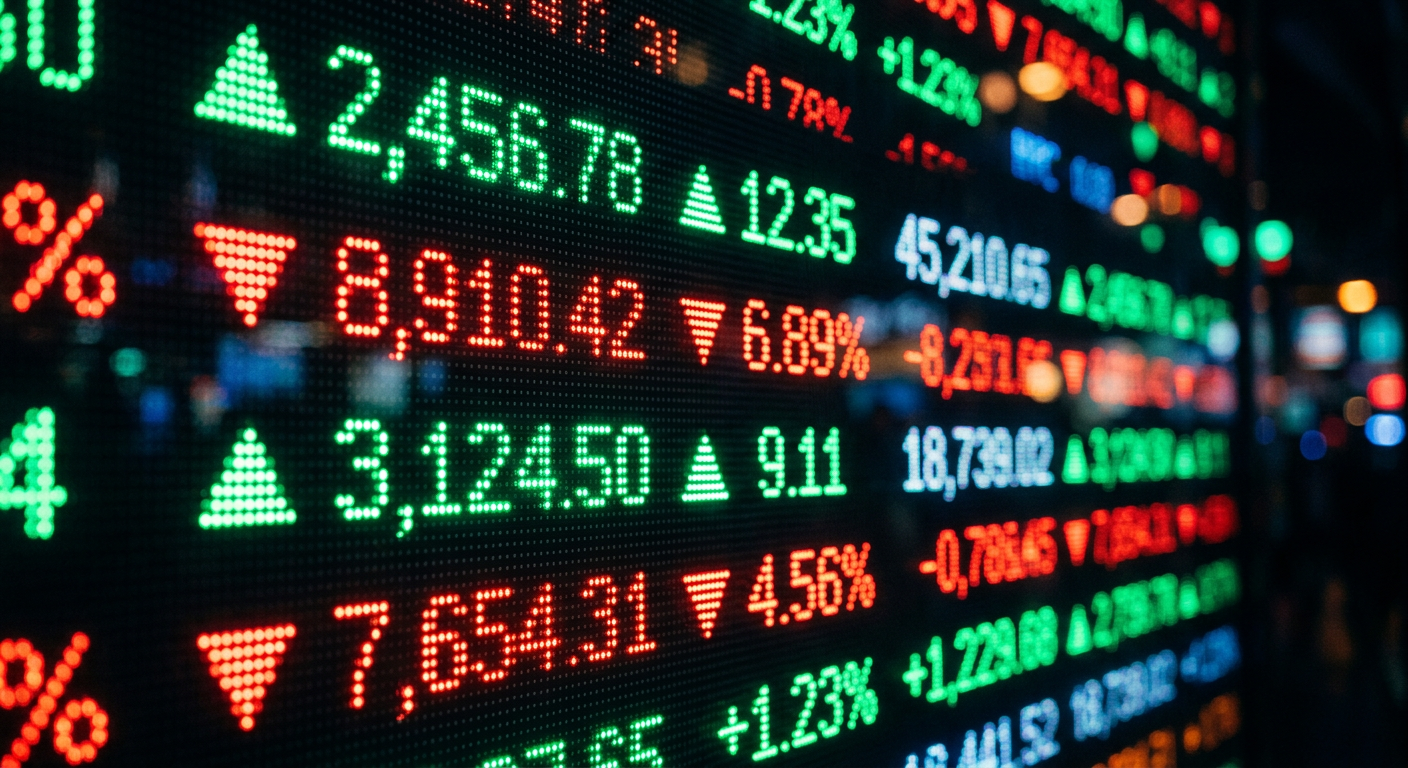
- Contracts trade between 1 cent and 99 cents, reflecting the market’s implied probability of the “yes” outcome.
- If the event resolves “yes,” every “yes” contract pays out $1. If it resolves “no,” “yes” contracts pay $0 and “no” contracts pay $1.
- You can buy or sell a contract at any point before the market closes, so you’re not locked in until settlement.
- Profit or loss is the difference between what you paid and what you sold for (or the $1/$0 settlement value).
A contract priced at 30 cents implies roughly a 30% chance of “yes” according to the pool of traders on that side. Prices move as new information comes in, similar to how odds shift in a betting market or how option prices shift with news.

What you can trade on
Kalshi’s market list has expanded well beyond its original economic-indicator focus. Current categories include:
- Sports: NFL, NBA, MLB, college football, golf, tennis, MMA and more. Sports contracts now make up more than 90% of activity on the platform and were about 89% of Kalshi’s revenue in 2025, according to reporting on the company’s business mix.
- Economic indicators: Federal Reserve rate decisions, CPI inflation, GDP, jobs reports, recession odds.
- Financial markets: Daily moves in the S&P 500, Nasdaq 100, oil prices and other benchmarks.
- Weather and climate: Hurricane strength, daily city temperatures, tornado counts.
- Culture and awards: Grammys, Oscars, Emmys, Billboard chart outcomes.
- Politics and elections: Congressional and presidential race outcomes, though this category has drawn the most regulatory and legal pushback.
Regulation and legal status
Kalshi’s CFTC registration is the basis for its claim to be legal nationwide, in contrast to sportsbooks and betting apps that need state-by-state licensing. That claim has been tested repeatedly in court and in Congress.
The CFTC itself pushed back on Kalshi’s election contracts starting in 2022, arguing they resembled gambling rather than legitimate risk-hedging instruments and questioning whether they served the public interest. Then-Chairman Rostin Behnam warned that election contracts could damage the integrity of the electoral process. Kalshi sued the CFTC over the rejection of its congressional-control contracts in 2023 and continued offering election markets while litigation played out.
Separately, several states have argued that Kalshi’s sports contracts function as unlicensed sports betting and have tried to block the platform, a dispute that remains unresolved in multiple jurisdictions. In May 2026, the US Senate banned senators and their staff from trading on prediction markets including Kalshi, following concerns about insider trading tied to nonpublic legislative information.
Accuracy of Kalshi’s markets
Whether Kalshi prices actually track real-world probabilities depends heavily on the category. Semafor’s Liz Hoffman found that between 2021 and mid-2026, Kalshi’s economic and financial contracts, covering things like inflation, unemployment and commodity prices, showed a high degree of precision. A February 2026 Federal Reserve study reached a similar conclusion, calling the platform a useful tool for measuring macroeconomic expectations.
Political scientist John M. Sides has pushed back on the broader claim that Kalshi efficiently aggregates information across all its markets, particularly outside the economic-data categories where liquidity and participant sophistication vary widely.

Kalshi vs. stocks and options
Kalshi markets differ from traditional trading in a few concrete ways:
- You’re trading the outcome of an event directly, not a company’s stock price or an option tied to it, so there’s no exposure to broader market sentiment moving a “correct” prediction against you.
- There’s no pattern day trading rule, so you can enter and exit as often as you want.
- There’s no time decay the way options have theta. If the implied probability doesn’t change, the contract price stays roughly flat.
- Contracts settle at a fixed $1 or $0, so there’s a hard ceiling on both gains and losses per contract, unlike stocks or leveraged options positions.

The risk side
Kalshi has disclosed that for every profitable user on the platform, there are 2.9 unprofitable ones. That ratio lines up with what tends to happen in short-term betting and trading markets generally: most participants lose money over time, and a smaller group of frequent, disciplined or well-informed traders account for the gains.
Sports markets in particular behave like sports betting with variance baked in, and Kalshi’s own marketing leans into that comparison. Treat position sizing the same way you would with any speculative product: risk only what you can afford to lose, and don’t treat a “regulated” label as a guarantee of favorable odds.
Getting started on Kalshi
- Sign up on kalshi.com or through the iOS app (Kalshi doesn’t currently have a full Android app in all markets, so check availability).
- Verify your identity; you must be 18 or older and a US resident to trade most markets.
- Fund your account. There’s no minimum deposit required to open an account.
- Browse markets by category and check the current “yes” and “no” prices before placing a trade.
- Set a limit order if you don’t want to accept the current market price, similar to placing a limit order on a stock.
For traders who want to automate strategies, Kalshi offers API access with Python starter code, which lets you pull market data and place orders programmatically rather than trading manually through the app.